Please Don’t Hire a Freelancer to Run Your Gift Card Rebate Program
On the surface, hiring a virtual assistant from Fiverr or Upwork to handle your rebate program might sound like a smart cost-cutting move. After all, it’s “just” sending out gift cards, right?
Wrong.
Running a rebate program, especially one that includes high-value digital cards or physical gift cards, is a high-stakes operation. It’s not a task for a gig worker with a Gmail account and a spreadsheet. It’s a business-critical function that touches customer experience, legal compliance, brand trust, and financial reporting.
At Incentive Insights, we’ve spent over 20 years designing and fulfilling rebate programs for B2B and B2C clients. And we’ve seen what happens when companies try to DIY with a virtual assistant. Spoiler: it’s not pretty.
Here are five real-world reasons why cutting corners with a freelancer could cost you far more than you save.
1. They’re Not Built for Compliance (But the Law Still Applies to You)
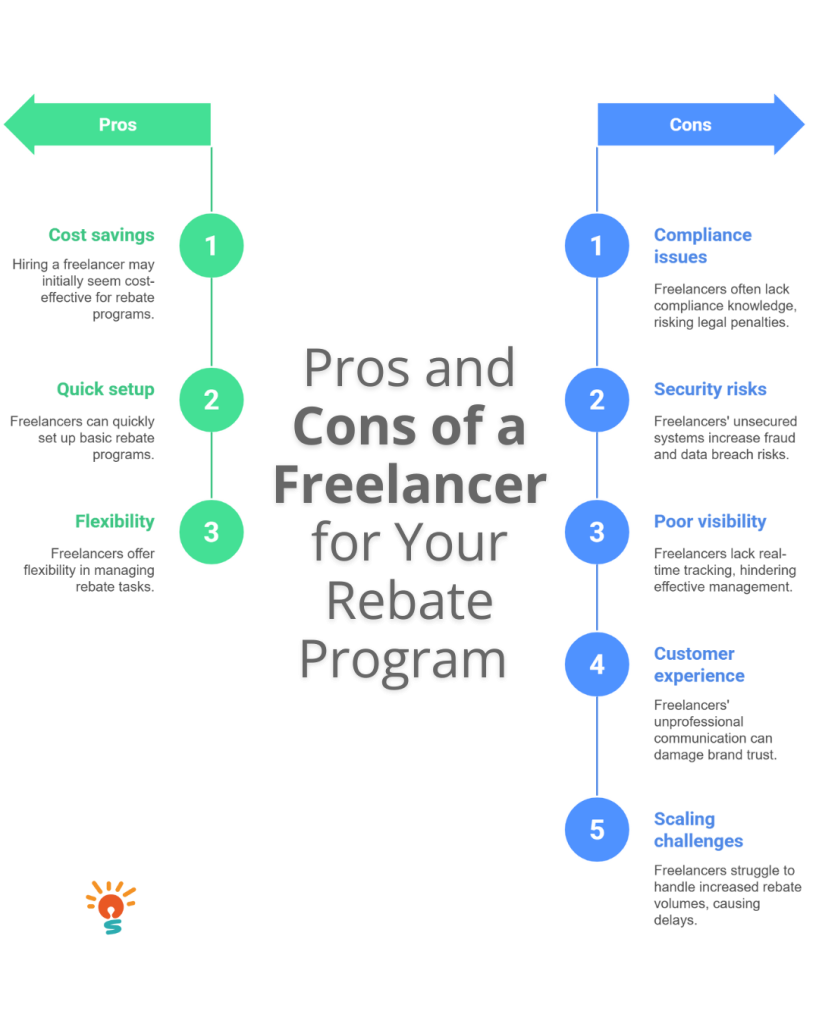
When you send a gift card as part of a rebate, you’re not just handing out a thank-you—you’re triggering a maze of consumer protection laws, tax rules, and escheatment regulations. These vary by state, by offer type, and even by card vendor.
A freelance VA likely doesn’t know the difference between breakage liability and 1099-MISC reporting. But when things go sideways, it won’t be them the state auditor calls—it’ll be you.
Real-life consequence: A national CPG brand received penalties from multiple states after a poorly managed freelance rebate program failed to handle expired card funds and tax documentation correctly. They ended up hiring a compliance team and a professional rebate processor, after the damage was already done.
2. Security and Fraud Risks Go Through the Roof
Gift cards are digital currency. And like all currency, they attract fraud. If you’re sending them without encrypted platforms, fraud detection protocols, or audit trails, you’re inviting trouble.
Freelancers often operate using unsecured email and cloud spreadsheets, which are shockingly easy to breach.
Real-life consequence: A wellness brand asked a VA to email $25 digital gift cards to every rebate participant. The spreadsheet of unredeemed codes was leaked in a phishing attack, and over 80% of the cards were stolen before they reached the intended customers. The company ate the cost and lost months of brand goodwill.
3. You’ll Have Zero Visibility When You Need It Most
Successful rebate programs rely on real-time tracking and clear communication to ensure effective management. You need to know:
- Who claimed the rebate?
- Was it approved?
- Has the gift card been sent?
- Did the customer redeem it?
Freelancers rarely have systems in place to manage this level of detail, let alone integrate it into their CRM or marketing dashboard.
Real-life consequence: A distributor ran a quarterly incentive for dealers using a freelancer to log claims in Excel. When Q4 hit, dozens of top customers had “missing” rebates, duplicate entries, or no record at all—the clean-up effort required calling each participant individually, erasing the program’s ROI in the process.
4. Customer Experience Can Make or Break the Program
Rebates are a brand touchpoint. Done right, they build trust, reinforce value, and turn one-time buyers into loyal fans. Done wrong, they do the opposite.
Imagine receiving an email from a vague Gmail address saying, “Here’s your reward—click this link.” Doesn’t exactly inspire confidence.
Real-life consequence: A startup used a freelancer to distribute gift cards after a product launch. The VA sent them late, addressed emails with misspelled names, and used a third-party redemption site that looked shady. Customers assumed it was a scam and left angry reviews. The launch momentum stalled out overnight.
5. Scaling Up? Forget About It.
Rebate campaigns can go viral—or at the very least, gain popularity over time. If your freelance assistant is working solo, things will quickly fall apart when volume increases.
Unlike professional partners, freelancers can’t guarantee service-level agreements (SLAs), surge support, or redundancies. When demand spikes, so do the delays.
Real-life consequence: A consumer electronics brand ran a limited-time rebate campaign for the holidays. The VA hired to manage the program was unable to handle the surge in claims. Backlogs ballooned. Customers waited over a month for rewards. Social media complaints poured in. The team pulled the plug early, and sales tanked.
So What Should You Do Instead?
Rebate fulfillment isn’t a task. It’s a system. One that requires security, compliance, real-time tracking, brand alignment, and most importantly, reliability.
At Incentive Insights, we offer end-to-end rebate and incentive support that scales with your business. Whether you’re running a national gift card promo, a B2B volume incentive, or a consumer cashback campaign, we have the infrastructure—and the experience—to deliver.
From secure gift card disbursement to branded customer communications and audit-ready reporting, we ensure your rebate doesn’t just go out – it pays off.
TL;DR
| Freelancer-Led Rebate Program | Incentive Insights |
| High fraud and compliance risk | Fully compliant and secure |
| Manual tracking (if any) | Real-time dashboards |
| Delays and missed redemptions | SLA-backed delivery timelines |
| Unbranded, unprofessional comms | Brand-consistent experiences |
| No backup when volume spikes | Scalable support team |
Do you need a rebate program that builds trust instead of breaking it?
Let’s talk. Contact us today and leverage over 20 years of proven experience to drive success for your brand.

Nathaniel Smathers, a contributor to the Incentive Insights blog, brings a fresh perspective on business strategies and market trends. With a background in marketing and a passion for data-driven insights, Nathaniel offers a unique blend of expertise and creativity. His approach to dissecting complex market dynamics and transforming them into actionable strategies makes him an invaluable asset to our team.